
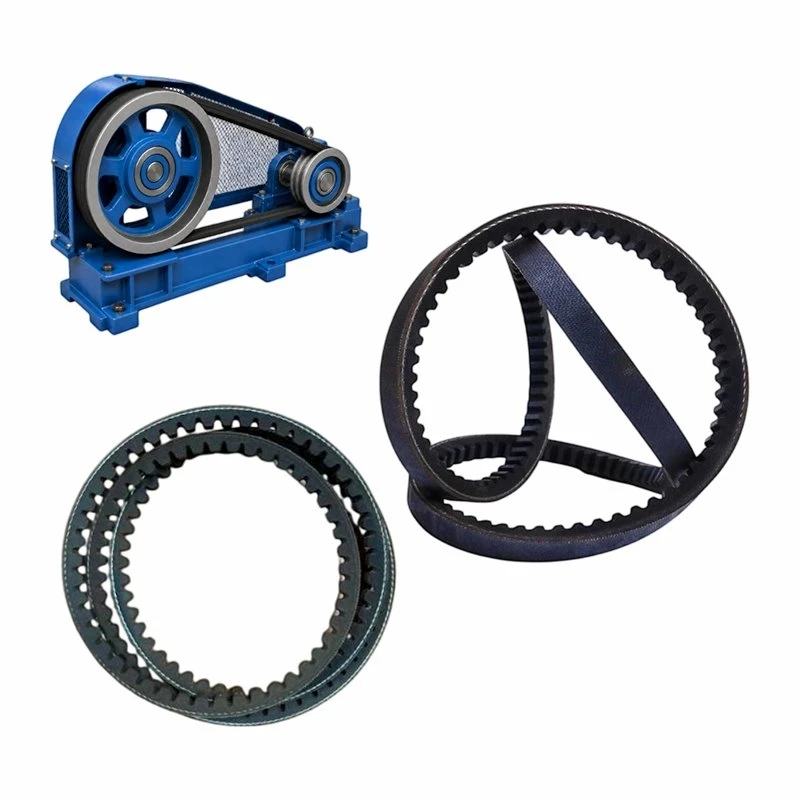
Centrifugal Fan Drive Belt – Reliable Power Transmission for Belt-Drive Fan Systems
Component Overview
The full performance of a belt-drive centrifugal fan depends primarily on the drive belt, which always operates under extreme pressure. It carries the full power of the motor while moving through the sheave grooves and withstands continuous cyclic tension, bending stress and frictional heat. If its size or tension is incorrect, it does not fail slowly or smoothly but rather suddenly breaks or tears. A small or worn Centrifugal Fan Drive Belt slips under load, causing the motor's power to be wasted as heat instead of airflow. Again, if the belt is too tight, it creates additional radial load on the motor and fan shaft bearings. This silently shortens the life of these bearings before the belt itself wears out.
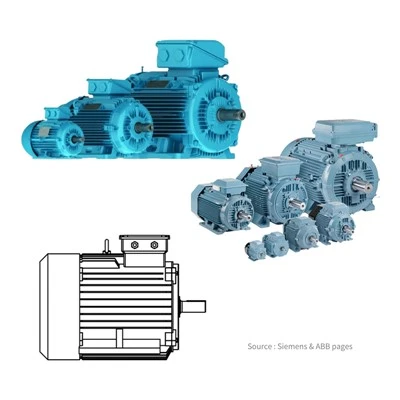
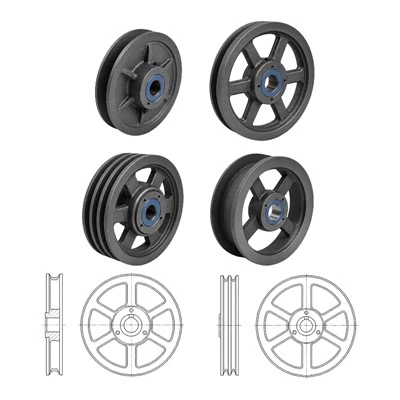
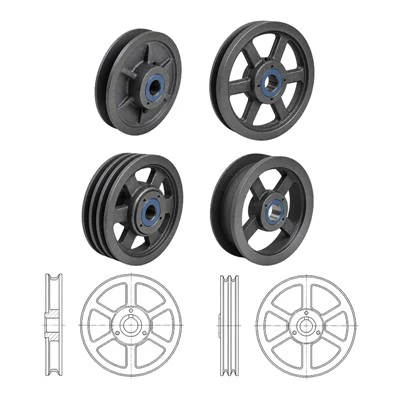
The first step in choosing the right belt is to match the V-belt cross-section with the transmitted horsepower and sheave pitch diameter. Fan-duty drives are typically sized to 130%~150% of the motor nameplate horsepower. This allows the belt to operate perfectly without any slippage during starting torque and transient loads. When using multiple belts in parallel, the belts must be used as a matched set. If there is a slight discrepancy in the length of the belts, excess load is placed on the shortest belt, which quickly heats up and tears first. And when it fails, it often ruins the entire belt set. Belt tension should never be adjusted by guesswork. The correct tension is determined by measuring the deflection force at midspan according to the manufacturer's chart for a specific belt and span length. Overtightening a belt to stop the noise of it slipping is a serious mistake; this is one of the biggest causes of premature failure of fan bearings in the field. Belt selection also depends on the environment. Standard rubber centrifugal fan drive belts are used for general industrial applications. However, for high temperature applications such as ovens or dryers, oil and heat-resistant belts should be chosen. On the other hand, in explosion-proof or ATEX-zone installations, the use of 'static-conducting' belts is mandatory to avoid fires caused by static discharge. And in drives that have small-diameter sheaves, belts with a 'cogged' or 'notched' profile are used to reduce heat. Each belt is supplied to match the customer's specified fan model, motor horsepower, sheave pitch diameter and duty environment.

Primary Industrial Uses







Compatible With
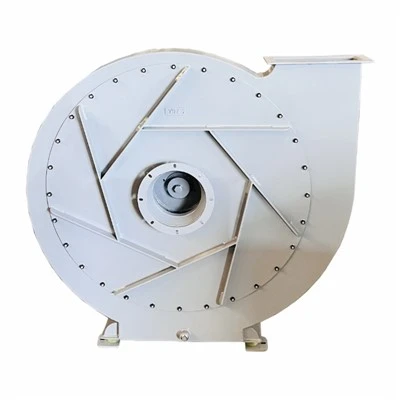
Y-Series, X-Series, W-Series Belt Drive Centrifugal Fans
Standard rubber V-belt sets.
01
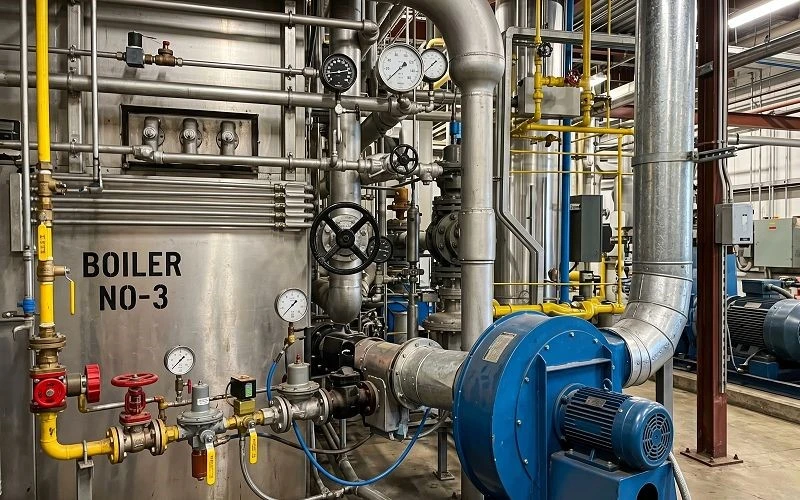
Induced Draft and Forced Draft Fans
Heavy-duty matched belt sets for large drive packages.
02
Explosion Proof Centrifugal Fans
Static-conducting belt compounds for ATEX Zone 1/Zone 2.
03
High Temperature Process Fans
Oil-and-heat-resistant belt compounds near combustion equipment.
04
Retrofit and Speed-Adjustment Projects
Matched belt replacement for sheave/speed changes.
05
Available Specifications
|
Cross-section |
(A, B, C, D - classic V-belt sections) per horsepower and pitch diameter |
|
Compound |
standard rubber; oil-and-heat resistant; static-conducting (ATEX); cogged/notched profile |
|
Supply |
single belt or certified (matched set) for multi-belt drives |
|
Sizing basis |
motor nameplate horsepower, fan RPM, sheave pitch diameter, center distance |










Hot Tags: centrifugal fan drive belt, China centrifugal fan drive belt manufacturers, suppliers, factory