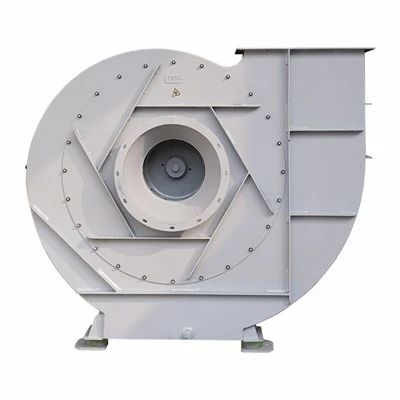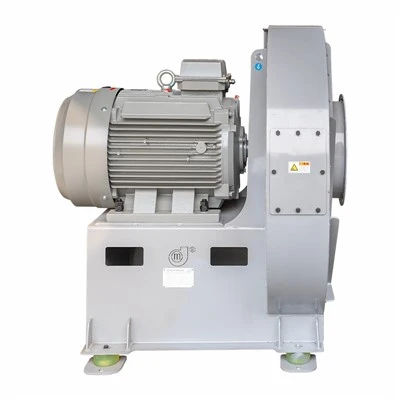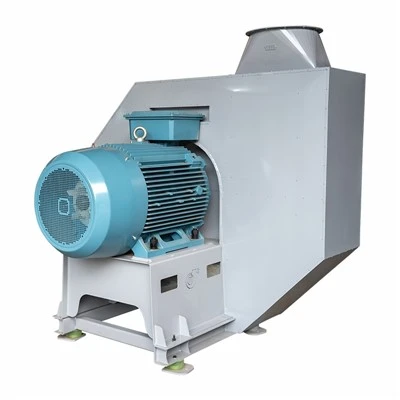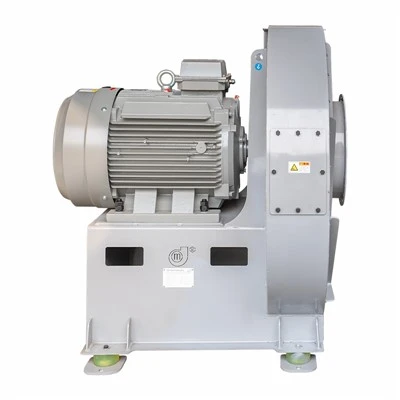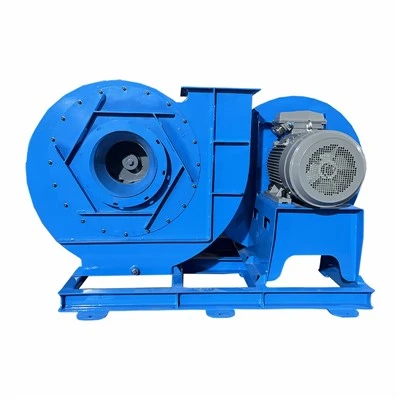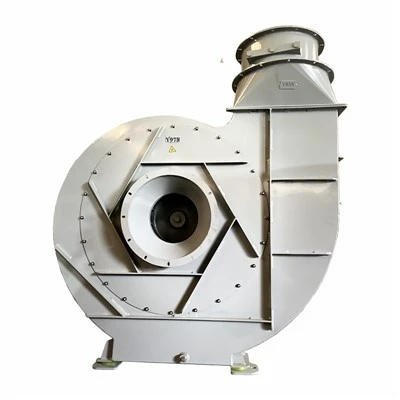

When selecting fan capacities for boilers, calculations are based on maximum evaporation rates, incorporating a 20% margin for both static pressure and airflow. Flow regulation in fan systems typically relies on adjusting damper openings; this creates additional pressure loss across the damper, resulting in significant energy waste. Traditional direct-on-line (DOL) starting methods suffer from issues such as high inrush current impacting the power grid, poor regulation precision, severe mechanical stress, and reduced equipment service life.
The core of the retrofit involves replacing the original mechanical regulation method with a variable frequency drive (VFD) system. By using a VFD to adjust the input frequency to the fan motor, the motor speed-and consequently the airflow-can be regulated smoothly and continuously.
The VFD cabinet features a switchable mode between grid power (bypass) and variable frequency operation; in the event of a VFD failure, the system can switch to grid-power starting to ensure production continuity. Motor speed can be regulated via 4–20 mA control signals from the Distributed Control System (DCS) or manual potentiometer adjustment, with real-time monitoring of motor speed and current displayed within the control system. The DC reactor integrated into the VFD unit effectively improves the power factor.
VFD control enables soft starting and soft stopping of the motor, eliminating voltage surges during startup, reducing motor failure rates, extending service life, and minimizing impact on the power grid. Eliminating damper-based regulation in favor of precise speed-based airflow control yields significant energy savings. Operating the motor below its rated speed reduces mechanical wear and noise levels. The system includes automatic protection functions against overload, overvoltage, overcurrent, undervoltage, and phase loss. This VFD retrofit enhances the system's level of automation and operational stability.
Interlock mechanisms-covering both high-voltage (power circuit) and low-voltage (control circuit) systems-must be implemented for the boiler's forced-draft and induced-draft fans. The high-voltage interlock mandates a specific startup sequence: the induced-draft fan must start before the forced-draft fan; furthermore, if the induced-draft fan loses power, the forced-draft fan shuts down immediately. The low-voltage interlock ensures that if the induced-draft fan's VFD malfunctions or the motor decelerates to a stop, the output of the forced-draft fan's VFD is cut off immediately. Due to the high inertia of centrifugal fan blades, significant inertial energy is generated during shutdown; therefore, the selected variable frequency drive must be capable of suppressing the resulting excessive rise in DC bus voltage.