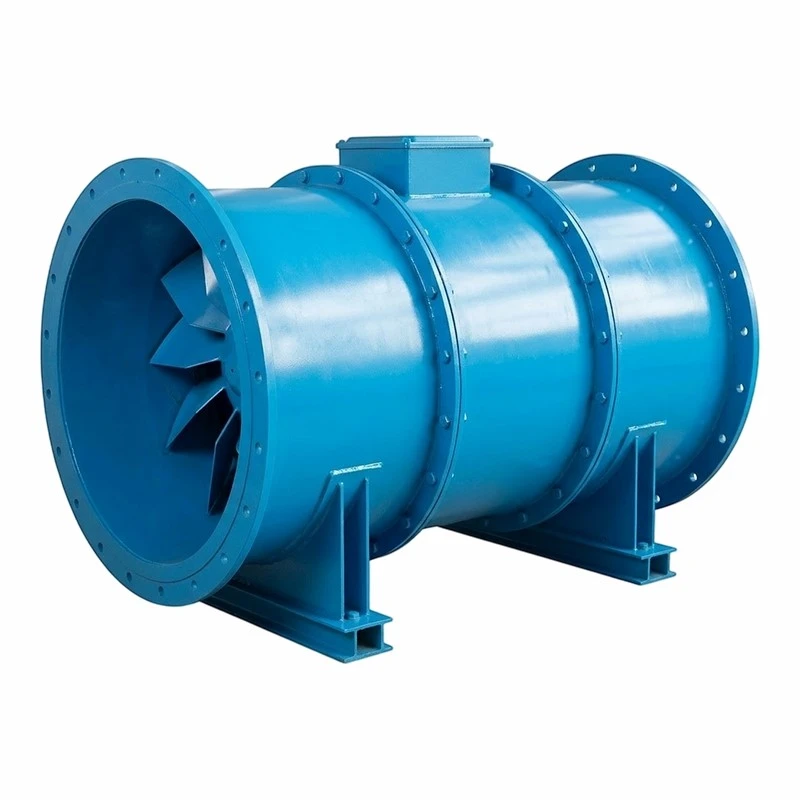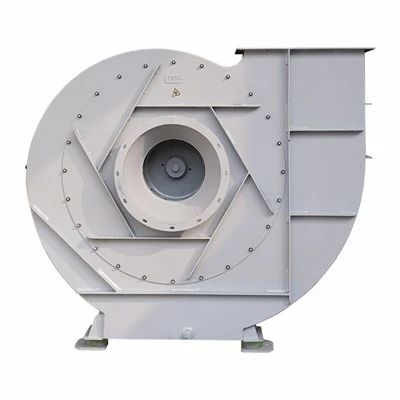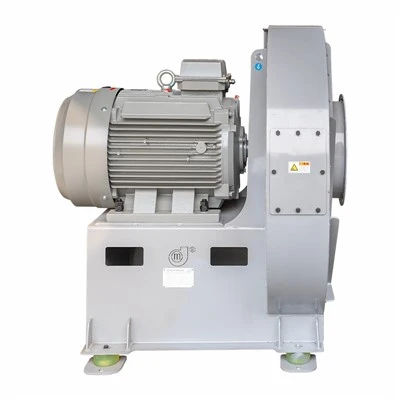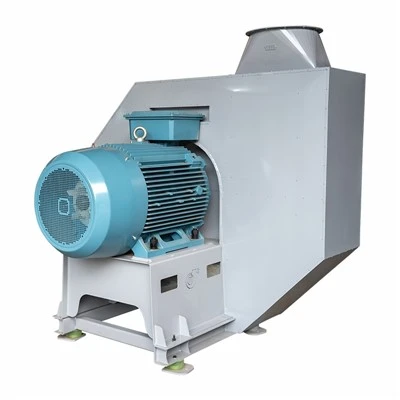

As ventilation equipment widely used in industrial, commercial, and residential sectors, centrifugal fans require effective airflow regulation capabilities to meet the demands of various operating conditions. Whether used for air conveyance, exhaust gas treatment, or HVAC system ventilation, these fans must allow for flexible airflow adjustments based on actual requirements.
Rotational Speed Adjustment
Adjusting rotational speed is one of the most common and effective methods for regulating the airflow of centrifugal fans. Changing the speed of the fan motor directly affects the output airflow. According to fluid dynamics principles, airflow is directly proportional to rotational speed: higher speeds result in greater airflow, while lower speeds reduce it. This method offers high precision and rapid response; furthermore, variable frequency drive (VFD) technology enables stepless speed regulation, leading to energy savings. For instance, in industrial production, if ventilation requirements change, the system can quickly adapt by adjusting the fan speed without the need for equipment replacement or complex operations.
Blade Angle Adjustment
For certain centrifugal fans-particularly those with adjustable blades-modifying the blade angle serves as a key method for controlling airflow. Changing the installation angle of the blades alters the shape of the airflow passage, thereby influencing the fan's output airflow and pressure. Increasing the blade angle narrows the airflow passage, resulting in higher airflow and pressure; conversely, decreasing the angle widens the passage, reducing both airflow and pressure.
Inlet Area Adjustment
Adjusting the inlet area is a simple and cost-effective method for controlling airflow. By varying the size of the inlet opening, one can regulate the volume of air drawn into the fan, thereby indirectly affecting the output airflow. For example, adjustable dampers or louvers installed at the inlet allow the opening area to be modified. Increasing the inlet area allows more air to be drawn in, thereby increasing the output airflow; conversely, reducing the inlet area decreases the airflow.
Air Damper Adjustment
Installing air dampers at the inlet or outlet of a centrifugal fan is a common method for regulating airflow. Airflow can be controlled by adjusting the opening of an air damper to alter system resistance. Increasing the damper opening reduces system resistance and increases airflow, while decreasing the opening increases resistance and reduces airflow.
Parallel or Series Fan Configuration
In certain specialized applications, a single fan may not meet the required airflow or pressure specifications. In such cases, multiple fans can be arranged in parallel or series to adjust airflow. Parallel configuration increases total system airflow, making it suitable for applications requiring high air volume; series configuration increases total system pressure, making it suitable for applications where significant resistance must be overcome.
Adjusting Exhaust Resistance
Adjusting the resistance of the exhaust system indirectly affects the centrifugal fan's airflow output. For instance, installing an adjustable valve or damper in the exhaust duct allows for system resistance changes by varying the opening. Increasing exhaust resistance reduces the fan's airflow output, while decreasing resistance increases airflow.
Changing Impeller Diameter or Blade Count
Modifying the impeller diameter or the number of blades is a fundamental method for adjusting centrifugal fan airflow. Increasing the impeller diameter boosts both airflow and pressure output, whereas decreasing the diameter reduces them. Similarly, increasing the number of blades raises airflow but also increases system resistance and energy consumption; reducing the number of blades has the opposite effect.
Redesigning the Impeller
Specific operating conditions may necessitate redesigning the centrifugal fan's impeller to meet particular airflow and pressure requirements. Optimizing the impeller shape, blade angle, and blade count can significantly enhance fan performance and efficiency. For example, in high-precision ventilation systems, impeller redesign can achieve higher airflow output alongside lower energy consumption.
Real-time Monitoring and Adjustment
With advancements in sensor and automated control technologies, real-time monitoring and adjustment of centrifugal fan airflow has become a smart solution. Installing devices such as airflow meters, pressure sensors, and temperature sensors within the fan system enables real-time monitoring of the fan's operating status. By integrating automated control systems, parameters such as fan speed and damper opening are automatically adjusted based on actual requirements, enabling precise control of airflow.
There are various methods for regulating the airflow of centrifugal fans, each offering distinct advantages and suiting specific applications. Selecting the appropriate method requires a comprehensive assessment of factors such as system requirements, budget constraints, and operational efficiency. For instance, speed regulation combined with real-time monitoring and adjustment is ideal for applications prioritizing energy efficiency, whereas damper regulation and blade angle adjustment are better suited for scenarios requiring rapid airflow changes. Regardless of the method chosen, the primary objective is to ensure the fan system achieves optimal operational efficiency and energy savings while meeting specific performance requirements.