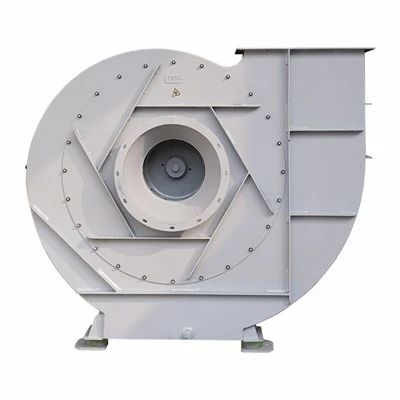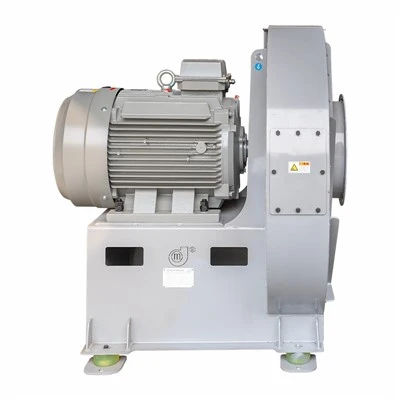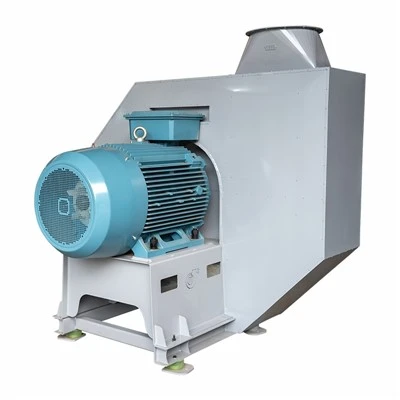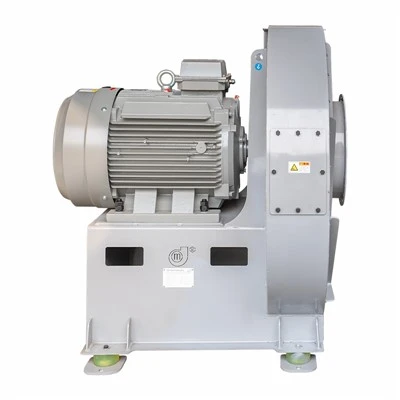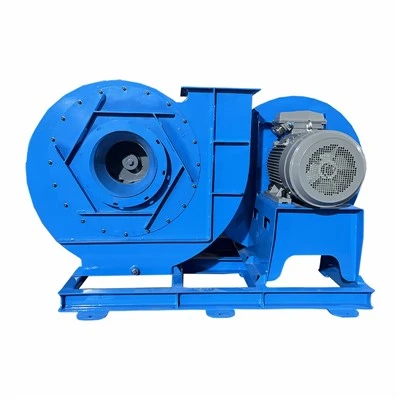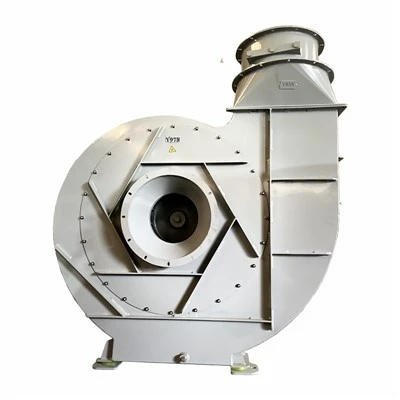

Centrifugal fan inlets are primarily configured in one of three ways-axial, radial, or inclined-with the specific choice depending on the installation environment and airflow requirements.
Axial Inlet
The inlet is parallel to the fan's main shaft, allowing air to enter directly along the axis. This configuration offers stable, uniform airflow with minimal resistance, making it ideal for applications requiring steady airflow input, such as ventilation systems and air conditioning units. A common example is the small centrifugal ventilation fan used in homes, where air enters axially and is discharged after being accelerated by the impeller.
Radial Inlet
The inlet is perpendicular to the main shaft, with air flowing in radially from the side. This design is suitable for industrial settings with space constraints, though it entails some energy loss due to the change in airflow direction. A typical application is a localized ventilation system for workshop equipment, where side-entry airflow directs air to a specific area.
Inclined Inlet
The inlet is positioned at a specific angle relative to the main shaft, balancing spatial layout with optimized airflow efficiency. This configuration is often found in complex ductwork systems, where the angle can be adjusted to align with the interfaces of other components. For instance, in building ventilation projects, an inclined design can reduce the number of elbow fittings and lower airflow resistance.