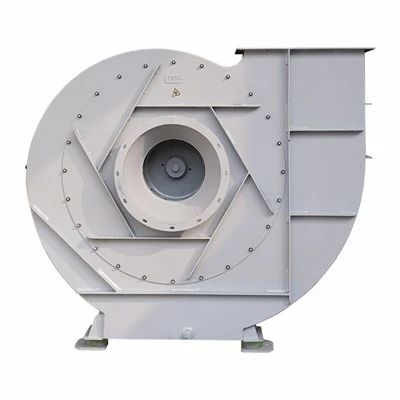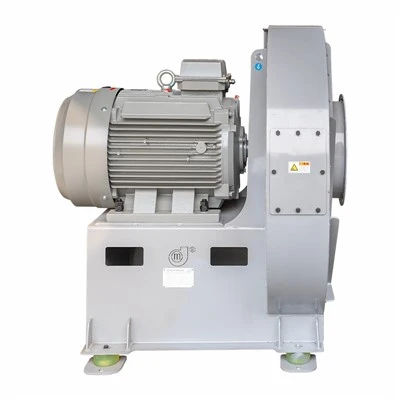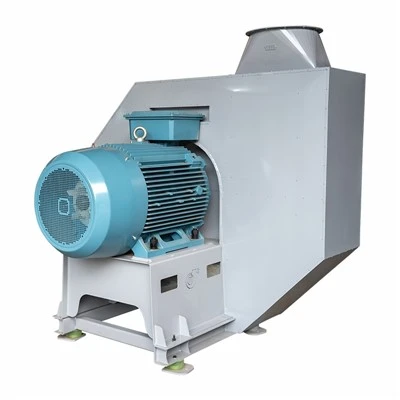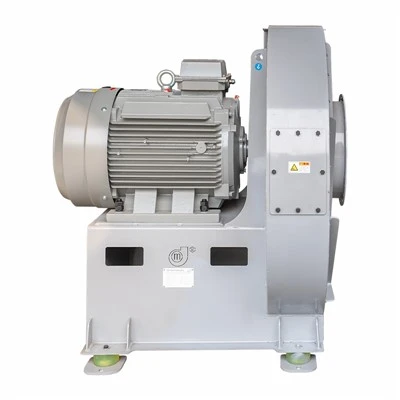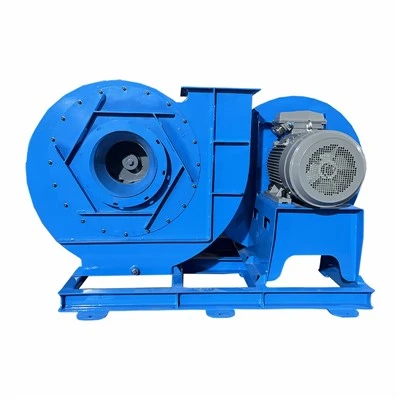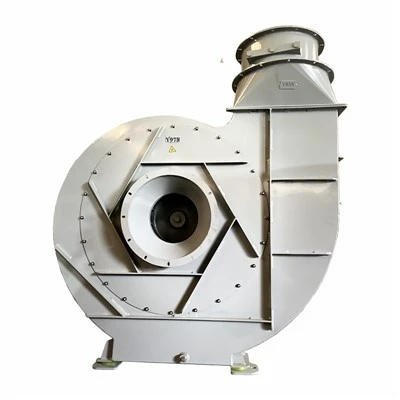

Explosion-proof ventilators are designed to prevent the generation of sparks, electric arcs, and dangerous temperatures during operation, thereby ensuring they do not ignite the surrounding explosive atmosphere. They utilize explosion-proof drive motors.
The materials used for the impeller and casing must be compatible and meet explosion-proof requirements. If the impeller is made of aluminum alloy, the inlet chamber and casing must be made of carbon steel. If the impeller is made of steel, the inlet ring and rivets of a centrifugal ventilator must be made of brass or aluminum. If other materials are used, they must be selected to ensure that contact between rotating and stationary parts does not generate sparks.
Structurally, the ventilator must be designed to prevent contact between rotating parts and adjacent stationary parts to avoid sparking. The impeller must undergo an overspeed test, operating at a speed of at least 110% of the maximum operating speed for a duration of no less than 2 minutes. The impeller must be balanced. At the rated speed and within the specified flow range, the deviation between the measured and specified aerodynamic performance must comply with relevant standards. The specific A-weighted sound level ($L_{as}$) of the ventilator at the point of peak efficiency must comply with the requirements of JB/T 8690.
Bearing temperature rise and vibration velocity of the supports must meet specified limits. Under specified operating conditions, the ventilator and auxiliary equipment must be designed for a service life of at least 10 years (excluding wear parts) and a safe operating time of at least 18,000 hours before the first major overhaul. The critical speed of a rigid ventilator shaft must be at least 1.3 times the maximum operating speed. Grounding devices meeting explosion-proof requirements and permanent grounding marks must be provided at appropriate locations on the casing and transmission assembly surfaces. If the inlet chamber is open directly to the atmosphere, a fixed protective grille (or mesh) must be installed to prevent foreign objects from being drawn into the ventilator. Rotating and transmission components-such as transmission assemblies, couplings, pulleys, and belts-must be equipped with safety guards. The flameproof motor and associated electrical accessories used with the ventilator shall comply with the provisions of GB 3836.1, GB 3836.2, GB 3836.3, and JB/T 7565.5.