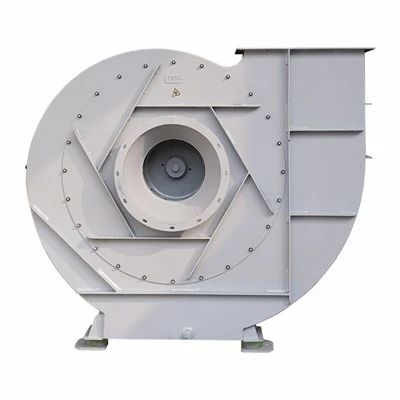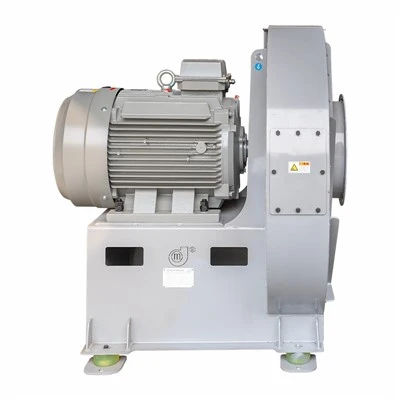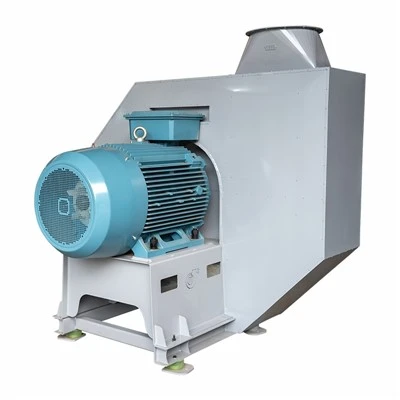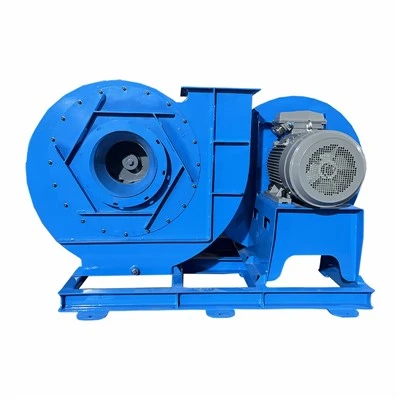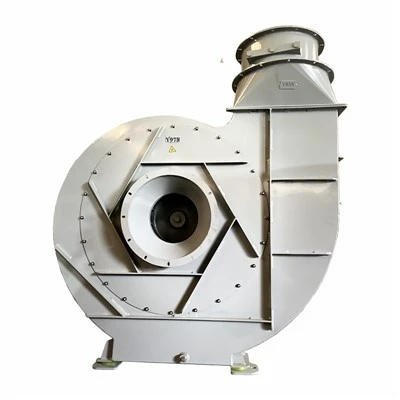

Due to structural asymmetry, micro-centrifugal fans exhibit significant velocity distortion at the outlet cross-section; fluid velocity near the outer wall of the volute is three to four times that near the inner wall, resulting in low efficiency (typically 40%–60%) and compromised ventilation and heat dissipation capabilities. Consequently, modern design approaches integrate numerical simulation and optimization techniques to enhance performance.
In modern optimization, Computational Fluid Dynamics (CFD) is commonly employed to analyze internal flow fields, often combined with the orthogonal test method to optimize parameters such as blade count, blade profile, bevel angle, and twist angle. Research indicates that for micro-centrifugal fans, an optimal parameter combination includes Blade Profile C, 50 blades, a twist angle of 10°, and a blade tip leading-edge bevel angle of 45°.
For micro-centrifugal fans, volute design is crucial for correcting outlet velocity distortion. Designing the volute profile using the equilateral primitive method allows it to better align with fluid flow trajectories, thereby mitigating velocity disparities through flow mixing; this optimization can reduce velocity distortion variance by an order of magnitude, significantly improving fan performance.