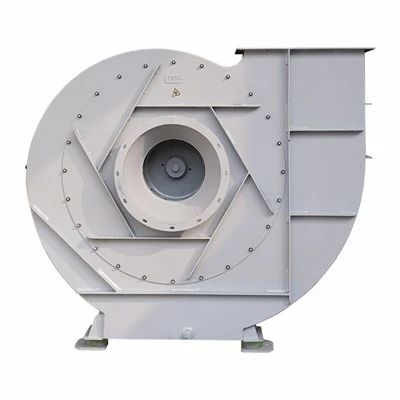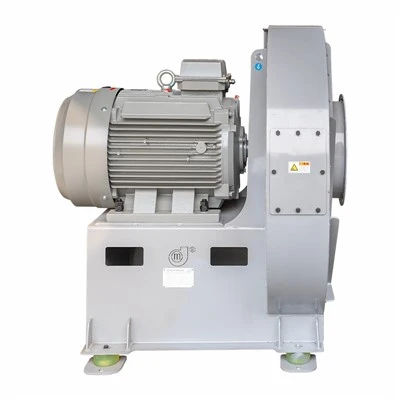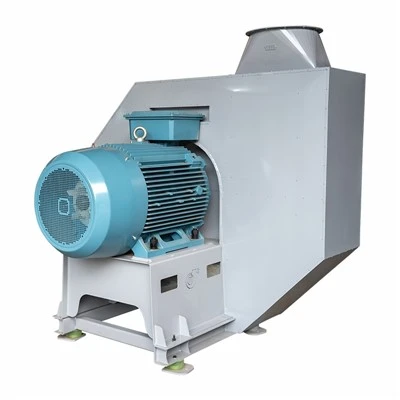

Surging is a phenomenon of instability in centrifugal fans characterized by periodic gas backflow and violent pressure fluctuations when the flow rate drops below a critical limit; the root cause lies in the fan's inherent "hump-shaped" characteristic curve, which defines a critical flow rate and a surge limit line.
When surging occurs, the fan exhibits symptoms such as a fluctuating decrease in motor current, a drop and fluctuation in discharge pressure, abnormal and loud noise, intense vibration, and rising casing temperatures. It manifests as rhythmic, whole-unit vibrations resembling rapid human panting-occurring roughly once per second-and is highly destructive; prolonged surging can lead to the total failure of the unit. During a surge, the fan's main shaft is subjected to reverse torque, causing fatigue damage to the inlet-side bearings; for large fans with high compression ratios, the destructive force generated during a surge is sufficient to damage the impeller and piping.
The core strategy for surge prevention is to maintain the fan's flow rate above the critical limit for the current operating speed, while incorporating a safety margin. Specific control measures include installing a vent valve on the discharge pipeline and employing automatic control schemes-such as inlet flow control or motor current monitoring-to automatically open the anti-surge valve and move the fan out of the surge zone when the operating point approaches surge conditions.
Before startup, contact the monitoring center and notify relevant personnel; inspect and clean the piping; preheat the oil system until the reservoir temperature exceeds 25°C; start the oil pump to activate the lubrication system; and verify the parameters on the control panel.
During startup, open the fan's regulating valve to the one-quarter position; once the motor is running normally, gradually open the valve further to reach the required operating conditions while monitoring the motor current (to ensure it remains within permissible limits) and the oil supply system's functionality. During operation, frequently check for secure connections, monitor unit and bearing vibrations against limits, listen for abnormal sounds, and observe bearing temperature stability. If surging occurs, rapidly open the discharge valve to move the unit out of the surge zone; if opening the discharge valve fully proves ineffective, create an opening at a suitable location on the discharge pipe to alter the system resistance.